Lingvano: Sign Language - ASL
- 4.8
- Rating
- 1.00M
- Installs
- Free
- Price

 Analysis by App-foxy
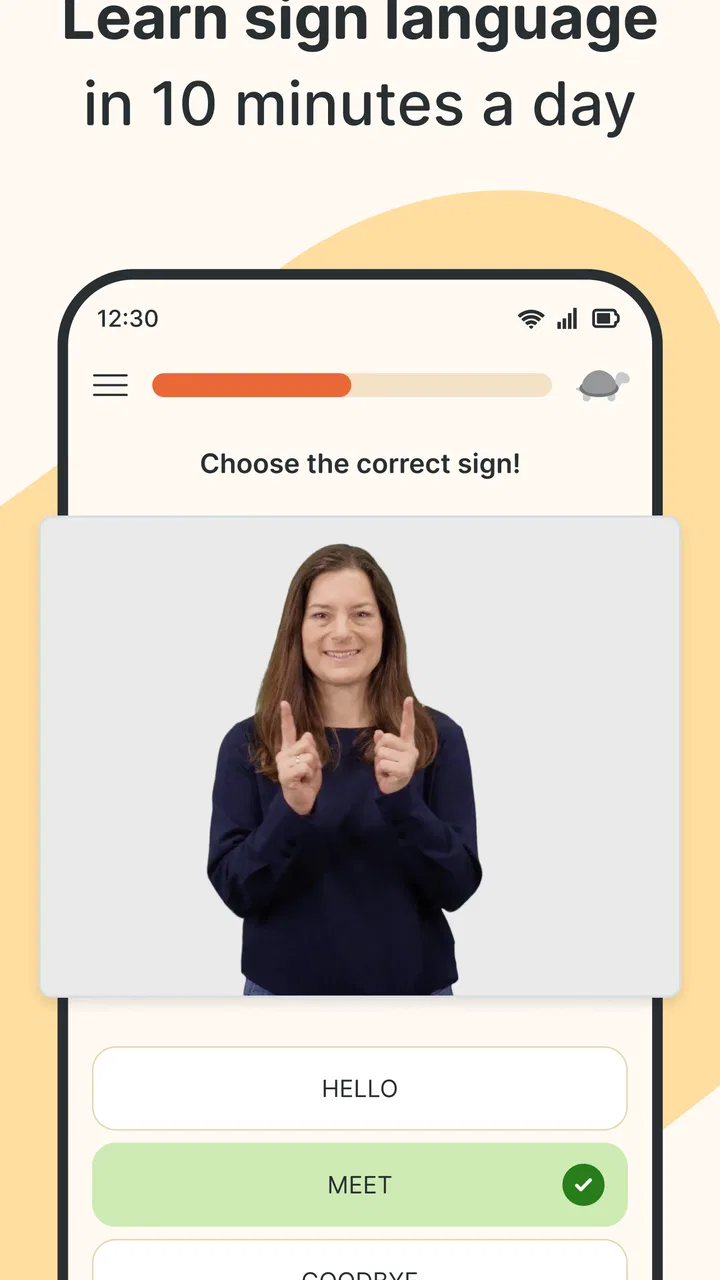
I went into Lingvano expecting a simple beginner lesson app, and that is exactly where it makes the most sense. This Education app from Lingvano focuses on American Sign Language, giving new learners a guided way to build a daily practice habit instead of leaving them to sort through disconnected videos. I found it most useful when I treated it as a short, repeatable routine rather than as a complete sign-language course.
The app is free to install and suitable for Everyone, although it includes optional in-app purchases ranging from $17.99 to $134.99 per item. Its current version is 5.0.9, and it runs on Android 8.0 or later. With an average rating of 4.8 from around 68 thousand ratings and over 1 million installs, it is clearly reaching a large beginner audience. Those figures do not replace personal experience, but they do match my impression that Lingvano is approachable, polished, and designed for people who want a gentle starting point.
How I built a useful daily workflow
The biggest mistake I made at first was opening the app without deciding what “practice” meant. I would complete a lesson, feel productive, and then forget most of the signs later. The better approach was to reserve a small, predictable part of the day for Lingvano and keep the goal modest: learn a few signs, review them aloud or silently with my hands, and then return to the difficult ones before moving on.
You May Also Like

 Blood Strike: 2.5 Anniversary
Blood Strike’s Loadouts Turn Every Drop Into a Tactical Gamble
A close look at Blood Strike’s custom loadouts: how fast access to signature weapons reshapes its battle royale rhythm, rewards preparation, and narrows the gap between fights.

 Pandora - Music & Podcasts
Pandora’s Music Is Easy to Start, but Harder to Recover
Pandora’s strength is its low-effort path from a seed to a station. Its weak spot is how much confidence it asks you to place in connection, setup, and quiet recovery.

 8 Ball Pool
 Is Built on Rivalries, Rematches, and Routine
A close look at the rivalries, rematches, shared routines, and unanswered safety questions that turn a quick pool match into a persistent mobile community.

 Samsung Music
’s Quiet Strength Is Playing What You Already Own
Its reach comes less from spectacle than from dependable access to a personal library. That simplicity is both the app’s strongest retention engine and its ceiling.

 AccuWeather: Weather Radar
AccuWeather Review: A Quick, Clear Forecast for Everyday Decisions
For everyday plans, the best forecast is the one you can understand quickly. AccuWeather makes rain timing, radar, and local conditions easy to act on, with a few trade-offs.

 Hill Climb Racing
Why Hill Climb Racing Still Turns Crashes Into One More Run
A tiny car, a bumpy hill and one more upgrade: Hill Climb Racing keeps resurfacing because its simple chaos makes every near-miss feel personal.
More From Our News Desk



That routine works because signing is not only about recognizing an image. I needed to notice hand shape, movement, position, and facial expression together. A quick glance at a sign can create false confidence. Lingvano’s lesson format encouraged me to watch, respond, and repeat, which made the practice more active than simply reading a vocabulary list.
I recommend using the app when your hands and attention are available. A commute may be convenient for listening-based language apps, but it is not always ideal here because ASL requires visual concentration and physical practice. Ten quiet minutes at a desk worked better for me than trying to squeeze in a lesson while multitasking. The short-session design is helpful, but it still deserves focused attention.
My basic workflow became simple:
Start with the next guided lesson rather than jumping randomly between topics.
Pause when a sign feels unclear instead of copying it quickly and hoping it sticks.
Repeat troublesome signs immediately, then revisit them later in the day.
Use newly learned signs in a tiny imagined exchange, such as greeting someone, asking a question, or describing a familiar object.
The last step made a surprising difference. Memorizing isolated signs is easier than using them naturally, but it is also less useful. Even a short imagined conversation forced me to remember the order and purpose of a sign. I would sometimes practice in front of a mirror, not to judge every movement perfectly, but to check whether my hands were actually visible and whether I was rushing.
What the beginner lessons do well
Lingvano is strongest when I need structure. Instead of searching for a suitable video, I can open the app and follow a clear learning path. That removes a common beginner problem: spending more time choosing resources than practicing. The presentation also feels less intimidating than starting with a long classroom-style course.
The lessons are broken into manageable pieces, so I rarely felt trapped in a long session. This is especially useful for someone who has tried language learning before and abandoned it because the daily commitment felt too large. The app makes it easier to begin again after a missed day, which matters more than an ambitious schedule that lasts only a week.
Another strength is the visual nature of the material. ASL cannot be learned well from written descriptions alone, and Lingvano keeps the focus on seeing the sign performed. I still had to slow down and observe carefully, but the app gave me a practical reference instead of asking me to imagine a movement from text.
It is also a good fit for someone who wants an introduction before committing to classes or a tutor. I could test whether daily ASL practice suited me without immediately arranging a formal course. That makes it useful for curious beginners, family members of Deaf people, travelers, and anyone who wants a foundation before seeking more personal instruction.
Settings and small habits worth checking
Experienced use of this app is less about discovering secret shortcuts and more about controlling the way I practice. I paid attention to the lesson flow, the available review prompts, and any playback or display controls offered on my device. When a movement was too quick for me, I replayed it rather than treating the first viewing as enough. When I recognized a sign instantly, I spent more time on the ones that caused hesitation.
That sounds obvious, but it changes the balance of a session. Beginners often repeat what they already know because it feels comfortable. A better habit is to identify the point where recognition breaks down. If I could understand a sign while watching it but could not reproduce it without help, I counted it as unfinished.
I also found it useful to keep the phone positioned at a comfortable distance, with enough space for my hands to appear clearly. A cramped setup makes it harder to imitate larger movements and encourages awkward posture. For home practice, placing the phone upright at eye level was more effective than holding it in one hand.
Notifications and reminders can support consistency, but they should not become the whole system. I prefer a fixed personal cue, such as practicing after breakfast or before winding down at night. If the app reminds me at a bad moment, I am more likely to dismiss it. A routine attached to something I already do is easier to maintain.
For families, I would create a shared practice moment rather than having one person learn alone and then try to teach everyone else from memory. Lingvano can provide the common visual reference, while a short exchange at home turns vocabulary into communication. That is more realistic than expecting a child or adult beginner to become the household instructor after a few lessons.
Faster patterns that improve retention
Once I understood the basic rhythm, I stopped trying to finish lessons as quickly as possible. Speed is not the same as progress in ASL. The faster pattern was to divide practice into three passes: watch for meaning, copy the movement, and then produce the sign without looking. Each pass answered a different question, and skipping the last one hid my weak spots.
I also grouped signs by a situation rather than by the order in which I encountered them. For example, after learning signs connected with introductions or everyday needs, I practiced a small sequence using only those signs. This helped me remember why I was using each one. It also exposed a limitation: knowing individual vocabulary does not automatically give me fluent grammar or natural conversation.
A useful trick was to practice both directions. First I watched a sign and named its meaning in my head. Later I thought of the meaning and tried to produce the sign. Recognition was usually easier than recall, so this two-way habit prevented me from mistaking passive familiarity for skill.
I would not recommend rushing through several lessons just because the material feels easy. Instead, I looked for delayed recall. If I could still produce a sign later without opening the app, it was beginning to settle. If I needed another visual prompt, I returned to it. This approach made my sessions feel slower, but the learning was more dependable.
Another practical use is preparation for a specific social situation. Someone expecting to meet a Deaf colleague, attend an introductory event, or communicate with a signing family member can choose a small set of relevant phrases and practice them repeatedly. Lingvano is more useful for that purpose when paired with realistic role-play. It should prepare you to make a respectful start, not create the expectation that a short app course equals fluency.
Where the app reaches its limits
My main reservation is that a guided app cannot watch me from every angle and correct every detail. I can imitate a demonstration incorrectly while believing I am close. That matters in sign language, where small differences in movement, location, or expression can affect meaning. Lingvano is a helpful practice partner, but it is not a substitute for feedback from a qualified teacher or Deaf signer.
The app is also not the right sole resource for someone who needs advanced conversational ability, professional interpreting skills, or a deep understanding of Deaf culture and ASL grammar. A beginner curriculum can give me useful building blocks, but real communication involves timing, space, facial grammar, regional variation, and the ability to respond to another person. Those skills need live interaction.
There is a second limitation in the short-session format. Ten minutes a day can establish consistency, but it does not guarantee meaningful progress if I never extend practice beyond the lesson. I needed additional time to review, form signs, and think through exchanges. The app works best as the central habit in a broader learning plan, not as a promise that a few minutes alone will cover every need.
The free entry point is welcome, but users should pay attention to the optional purchase structure before committing to a long-term plan. The app is free to begin, while individual in-app purchases are listed between $17.99 and $134.99. I would first decide whether the lesson style suits me, then consider whether continued access is worth the cost. That is a more sensible choice than paying simply because I enjoyed the first few sessions.
Compared with random video searches, Lingvano offers a clearer path and less decision fatigue. Compared with a live class, it is more flexible and private, but less responsive to my mistakes. Compared with flashcard apps, it gives movement a more central role, although flashcards can still be useful for quick recall. For me, the strongest combination would be Lingvano for guided practice, live interaction for correction, and real conversations for transfer.
Who should use it, and who should look elsewhere
I would recommend Lingvano to a complete beginner who wants a friendly starting point, a person who learns well from visual demonstrations, or someone who needs a repeatable routine rather than a shelf full of resources. It is particularly suitable for people who feel overwhelmed by unstructured online material. The app’s beginner focus makes it easy to start without already knowing ASL terminology.
It can also help a family begin learning together. A parent, partner, or friend who wants to communicate more thoughtfully with a Deaf or hard-of-hearing person may appreciate having the same guided material available on a phone. The important qualification is that the app should support genuine communication and respect, not be treated as a shortcut around learning from Deaf people and engaging with the wider signing community.
I would look for another primary resource if I needed formal assessment, detailed correction, advanced grammar, or immediate conversation with a teacher. I would also avoid relying on it alone if my goal were interpreting or workplace-level fluency. In those cases, a structured class or tutor should take the lead, with Lingvano serving as supplementary practice if its format fits.
My verdict after making it a habit
Lingvano succeeds because it makes the first step feel manageable without pretending that the first step is the whole journey. I liked having a focused lesson path, visual demonstrations, and a routine that could fit into an ordinary day. The app’s large audience, 4.8 average rating, and more than 1 million installs suggest broad appeal, and I can understand why beginners respond to its accessible format.
My advice is to use it deliberately: give each session your full attention, replay rather than guess, practice recall without the screen, and turn vocabulary into short exchanges. Check the available controls and build a setup where your hands are easy to see. Most importantly, add human interaction when you are ready, because no phone lesson can replace the feedback and natural timing of a real conversation.
Lingvano is a strong doorway into ASL, not a replacement for walking through the whole language. If you want a low-pressure way to begin and can maintain a steady habit, I think it is worth trying. If you need advanced fluency or precise correction immediately, start with a teacher or class instead. Used within those limits, it gives beginners a practical foundation and a much better first routine than aimless browsing.
FAQs for Lingvano: Sign Language - ASL
01What is Lingvano: Sign Language - ASL, and who is it for?
Lingvano is an app designed to teach American Sign Language (ASL) through interactive lessons, making it ideal for beginners and those looking to improve their skills. Whether you're learning ASL for personal communication or professional requirements, Lingvano offers a user-friendly platform to enhance your understanding and fluency.
02How does Lingvano teach ASL effectively?
Lingvano uses a combination of video tutorials, quizzes, and interactive exercises to teach ASL. The app features real-life scenarios and visual aids to help users understand and remember signs more effectively. With its step-by-step approach, learners can gradually build their vocabulary and comprehension skills.
03Is Lingvano suitable for all age groups?
Yes, Lingvano is designed to be accessible for users of all ages. Its intuitive interface and engaging content make it appropriate for both younger learners and adults. The app ensures that learning ASL is both fun and educational, providing a suitable platform for anyone interested in sign language.
04Does Lingvano require an internet connection to use?
Lingvano requires an internet connection for initial downloads and updates, but many features can be accessed offline. This allows users to continue their learning without needing constant internet access, making it convenient for learning on the go or in areas with limited connectivity.
05Are there any subscription fees for using Lingvano?
Lingvano offers a free version with basic features, but to unlock premium content and advanced lessons, a subscription is required. The subscription provides access to a wider range of lessons and personalized learning paths, offering a more comprehensive ASL learning experience.
Pros
- User-friendly interface for easy navigation.
- Comprehensive lesson plans for all levels.
- Interactive quizzes to reinforce learning.
- Offline mode available for convenience.
- Visually engaging design enhances learning.
Cons
- Limited languages beyond ASL.
- Some features locked behind paywall.
- Occasional app crashes reported.
- Requires large storage space.
- No live chat with tutors available.

Lingvano: Sign Language - ASL
Gallery